DEvans
-
Posts
81 -
Joined
-
Last visited
Content Type
Forums
News
20th
EduGeek EDIT Conference
Blogs
Everything posted by DEvans
-
I used my wildcard at such the wrong time last season, I'll be back! Great fight for top and kudos to Matt. Great win.
-
Agh. Kept bouncing between third and second, only held first position for a few weeks here and there. Winner came out of no where didn't even see him coming until about half way through the season then just kept on top throughout the last weeks ha. Well done. hope to see it again for next season. 3rd Place, I'm happy with that.
-
Well this is becoming an interesting league. Couldn't get much tighter at the top. Only 5 points behind top now. (2/2/2015) I've been close before but have yet to plant myself in the top spot keep bouncing between 3rd-5th. So frustrating! Haha
-
I haven't visited this thread in a while. Looks like you have got further Banksey. I'm actually not too shocked that the Bluetooth folder is being tricky, its the same problem I have with a folder created by Media Center. Media Center creates a folder called "Recorded TV". Which is installed upon the root of the Windows 7 profile, like an additional profile folder, yet server side you cannot redirect it. They actually can play up with offline files, especially if the Bluetooth folder resides within "Documents", unsure if it does in your case. Quick Tip When playing with offline files on a test machine, never trust any result unless you format the offline file database. When you keep messing with policies a lot of the time the offline files begin to play up rotten because they don't know which way is up. Warning: Do not do this on a live account, you can potentially wipe their documents. How to Format the Offline File Database 1. On the Client/Test Machine go to: HKEY_LOCAL_MACHINE\SYSTEM\CurrentControlSet\Services\Csc\Parameters 2. If parameters does not exist, create it. 3. Now in the Parameters node create a new registry value with the name FormatDatabase of type REG_DWORD (i.e DWord 32-bit value) 4. Set the data in this new registry value to 1 5. Close the regedit editor and restart This now properly puts you back into first Sync Mode. As if no offline folder sync was ever done. You can then watch it's behavior as if it was a live user doing it. It should "just" work when all policies are in place, you don't really want the user to need to do anything. God forbid. See if this resolves your intermittent issues with random machines. Regards, Dan
-

User Profiles not being recreated correctly
DEvans replied to itdirectorscut's topic in Windows Server 2000/2003
Just a few questions to help you out with this: What is your Home Path you have set in Active Directory? What is your Profile Path in AD? Which redirections are you applying? For each redirection what settings do you have in place? Are you using RSAT for your Windows 7 Group Policies or are you using the 2003 server for GPO? Thanks, -
This is what I mean about migrated networks. Did you use XP before? Yeh Enable Allow or Disallow use of offline files feature. Disable (Truly disable not choose "not configured" as the computer won't see a change) Remove Make available offline. Sync all offline on login and Logoff. You will need to Enable these. This is why in Group policy we have three choices. If you set them to not configured, it won't necessarily tell the machine to go back to defaults. Machine will go.. i'm disable.. oh you've changed it to not configured.. well i don't know what that means, so i'll remain off. Once you have left it running in the school for a while, go back and change them all to not configured, thus restoring you to defaults. The less policies applying the better. Hope this helps,
-
Agree with Witch, It is a question of how long is a piece of string. I have seen syncs take ages (depends on how many small files you have). It is essentially just copy and replacing from the server to the client and if the client is on a slow 5.2k Sata drive over a wireless 54Mb/s link. Then obviously we are talking a long time. Gigabit to High Performance SSD. Few Seconds. It is amazing how far we have come the last 5 years. Once the first sync is done however, it is incremental changes from then on.
-
The Sync is not instantaneous, obviously if you have a lot of files, it will take its time to sync up. Log in again to the domain, go to the Sync Center and see what it says, it will probably say something like preparing/waiting for first sync or something. If i were you, to make sure it all works, leave it be. See if it syncs automatically, I have never known it not to. Once it has all sync'd then log off, turn off your networking and then log back in, your files should be available then. Then create a bunch of new documents, also edit a few of the existing ones. Log out, log back into the domain and see if it syncs them from the computer to the server and see if it updates the previous versions of the documents you edited. If it does, then you have successful setup of Offline Files.
-
To test it all you need to do is logon a machine with a staff account. Make sure the profile syncs in sync center. Log off. Then turn off your wireless and/or pull out the network cable and attempt to login. If you are able to, then check to see if you can see your documents. This is how to test to see if you can login with a cache profile. Any work they do at home will then sync with the server once they come back in and use the laptop. Bare in mind for the teachers that they need to turn on the laptop and login or it won't sync and their files won't be available from any other computer. That's a common question. Unless you use VPN or Direct Access of course. Then it will sync over the link when they are at home.
-
Valid point Synack, but anything more than a minute and a half should be questionable really. Depends on the speed of the Hard Drive as well of course but realistically they are normally standard SATA. I haven't dealt with itunes on PCs for a while, so i did forget about that whole issue. Users.. eh. Get an ipod for goodness sake. There is a reg tweak you can do to firefox to put it in a hidden folder in the documents. Users don't see it, don't see a difference yet because it is then redirected out, its a quicker profile. I'll have to hunt that down again. iTunes however is just a royal pain.
-
Redirect everything out of the profile. Though we do not redirect AppData (ironically the folder that gets large). We don't do that because that would rely on 3rd parties to know how to create software properly. Microsoft just want a 1:1 relationship of computers, if a computer isn't shared then regardless of the profile size it will always load from the local machine first, getting people logged in and working in less than 5 seconds. From my experiences, a lot of the time it isn't always about your server setup, it is about your infrastructure. Flat Networks and no stacking in the cores is why it gets stupidly slow. A true 1Gb/s link downloading a profile of 5GB (crazy example) for the first time ever, should technically take not a second more than 45 seconds. I've seen people on here saying they are taking 15-20 minutes! I'd be sacked on the spot. Lot of networks are setup as a Gigabit, but are not setup for a Gigabit. Even on a flat network, with redirection setup as mentioned above you should really be able to get logins down to less than 10 -15 seconds. Regardless of their size. Redirecting the AppData is purely based on your environment. In mine it breaks a certain application that (apparently) is used all the time.. yet I never see anyone using it. I would recommend it if it doesn't break stuff haha.
-
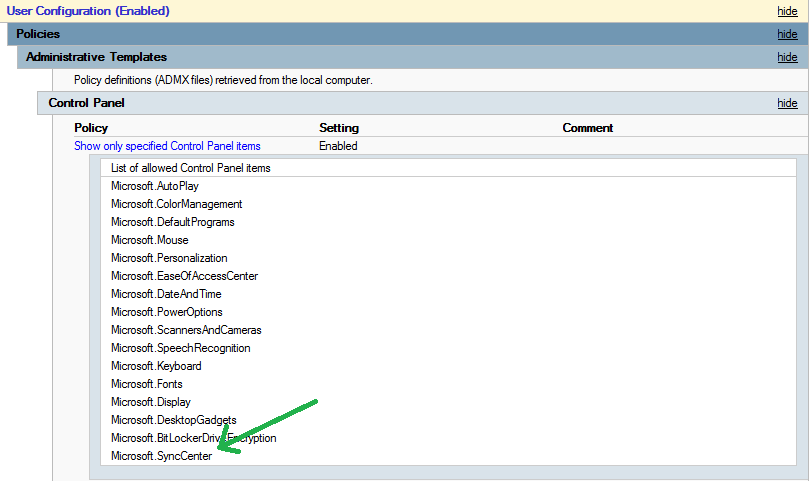
Hey Mate, Since I am waiting for SIMS Summer Upgrade to deploy and have people moan at me during the day I have the time to write this out. haha. If you have a fairly new network (2008R2) which was rebuilt and not migrated and your clients are Windows 7 (again not upgraded from Vista/XP) then you will be already very close to having it all setup and ready to go as by default a lot of the polices are already active and on. I've built dozens of networks from the ground up over the last few years before I took the job i'm in now and have been fortunate to come across these gotchas and common mistakes. In my network I have: Redirected Documents - To their home drive Offline Files Enabled and Working for all Machines An additional Administratively assigned offline file which is not part of the redirected folders In my Active Directory (AD) (apologies if this is teaching how to suck eggs, this post can be the benefit of others as well), in the properties of a user you have the profile tab which specifies the location of their home drive. I have it set to use drive letter P: (P for Personal) and the path to their documents on the server. This alone will map the P:\ drive for the user in their "My Computer" (which is now just called Computer in Win7+). This will not make it available offline automatically. The reason being is because when they click Start -> Documents it will take them to their C:\Users\%username%\Documents folder because we have not yet setup the redirection to make that link go to their home folder location (P:\). So in Group Policy, we setup that redirection. This is a user based policy. In my environment, in my staff user policy, I have redirection setup: So under User Configuration -> Policies -> Windows Settings -> Folder Redirection -> *Right click* Documents and choose properties and I have chosen "Redirect to the user's home directory". On the Settings tab, I don't grant them exclusivity, don't move because I dont need to and I have Windows 7+ throughout the environment so we don't need to turn on legacy features. By simply setting this policy, on the next restart of your client the P:\ drive will now be available offline and the "Sync Center" icon will appear on it. You can prevent this automatically happening by enabling the policy Do not automatically make specific redirected folders available offline found: User Configuration -> Policies -> Administrative Templates -> System -> Folder Redirection -> Do not automatically make specific redirected folders available offline. The reason this is here is because sometimes people don't want to use offline files. In XP environments this was common as XP offlines files were very difficult to manage, not because of the administrator, but because of the limitations built into XP and Server 2003. Now because sometimes Synchronization doesn't always play ball, even on Windows 7, it is a good idea to allow your users access to the Sync Center area on Control Panel. This is optional, but because offline folders is a user based setting, as an admin you will be prevented by your own restrictions troubleshooting. So I set the policy in my control panel restrictions to allow this: User Configuration -> Policies -> Administrative Templates -> Control Panel -> Show Only Specified Control Panel Items -> Add in Microsoft.SyncCenter For a full list of Windows 7 Canonical Names visit this link: Canonical Names of Control Panel Items (Windows) Now finally, if you have a migrated environment, it is wise to turn on offline files. By the sounds of things you don't need to do this as you have already seen synchronizations, but for the benefit of others, you need to turn on offline files if in the past you have had them turned off. Computer Configuration -> Policies -> Administrative Templates -> Network -> Offline Files -> Allow or Disallow use of the Offline Files feature. Set to Enable. This is always a good on or off switch you can use if you only want Synchronization on certain machines. So you say if you are a laptop, turn on offline files, if you are a desktop turn it off. My environment I live the Microsoft Dream and have a 1:1 ratio of laptops to students and 1:1 of desktops/laptops to staff. So I have it all turned on because no computer is shared. Offline files is good to turn off for shared machines. If a desktop is allocated to an individual, it is good to have on because if the server's go down, they can continue to work from their offline files cache, another safety net for you. Essentially, for my documents synchronization you are all done from here. There is no need to really play with anything else. What if what I want sync'd is not in their documents? This is when you can use the policy Administratively assign Offline Files. User Configuration -> Policies -> Administrative Templates -> Network -> Offline Files -> Specify Administratively assigned offline files. Here you can specify a file using a unc path (\\servername\share\file). I use this for a certain file for a certain application. Meaning when offline they can still receive the settings I set server side. Clever stuff, but all optional. Within this same location is where you can specify if you want to encrypt etc. I'm confident you can read a list, so i'll let you have a ganders there. I hope this helps you all out with your issues mate and I hope this answers a few questions for those just curious. Any other questions, by all means, that is what a forum is for. Regards, Dan

-
Offline files are nice and easy to setup and since Windows XP they have come a long way. Back in the days of XP, they were not too great as for some reason Microsoft decided there needed to be some exclusions to what exact file types could be synchronized. To be fair, they had good reason for the filetypes they excluded, its just that XP had a tendency to just moan about it all the time and the user had to suffer with a big red X as an error every time they logged on or off. In Windows 7 Offline files are really easy to sort out. There are a tonne of policies you can pick and choose from but honestly, you can just do it with one policy. As soon as you redirect a folder on a Windows network, the most common being the Documents folder, it becomes instantly available offline. This is because by default all redirected folders are set to be available offline and if you didn't want this to happen you enable the policy that turns this off: User Configuration > Policies > Administrative Templates > System > Folder Redirections "Do Not automatically make redirected folders available offline" -> Enable To be honest, if you just want their documents to be available, then simply apply the redirection policy (which you probably already have) to the documents folder and you'll see the magical "Sync Center" icon appear on their documents drive. Easy. As for the Syncing, just make sure you allow the users access to the Sync Center bit in the Control panel, if you restrict the control panel then the Canonical name is Microsoft.SyncCenter, just add that to your whitelist. It does not use ActiveSync that is Microsoft Exchange term and technology and nothing to do with Offline files. Sync Center is what it is and is built into Windows 7, 8 and 8.1. When they come into the school, it will realise, they did work at home because the copy on the machine is newer than the copy on the server and it does the sync and updates the existing copy. The Cache is stored is the CSC folder in the Windows directory. Do not attempt to access this directory. It is heavily locked down. Things to consider Encryption - Do you want to enable it? Technically speaking there is a copy of potentially sensitive files on that machine, though at the same time you have password protected the machine. (good ole Risk Assessment there) Domain machines only, will only work with a machine on a domain. Profile Adjustments and Server Changes - When you cut and paste documents server side, they are classed as newer. So if you do some shuffling and move someones documents about, whatever work they do at home has a high chance of being lost as the server will be like, I'm the newest, sync with me, get rid of all that other stuff. It is genuinely luck sometimes that can prevent this, but if a file is lost, it is lost. I'm not saying it is impossible to get back, but my god it will take a while and a lot of luck. Awareness, make sure people are aware of how it works. Make sure they know how to sync up. Sometimes they login their machine and don't leave it long enough and it goes wrong. Alternatively, if they have a laptop and don't turn it on. If they login another machine in the school, they will probably expect it to be in their documents. Since it hasn't uploaded from the laptop to the server yet.. well you can see the issue. As others have mentioned, Cache profiles do need to be possible. What many don't know is that since 2008R2 they are on by default, you do not need to disable or alter policies, UNLESS you have migrated from 2003 as all clients would be like its off by default and since the policy is not configured on the 2008R2 (or higher) server, i'm going to assume it remains off. This is why you have a disable, not configured and enable and yet sometimes no configured and enabled is the same, or vice versa. Tbf unless you really know GPO, that's all irrelevant and another discussion for another time, it is clever and just trust that it is haha. Hope this helps!
-
Ok its been a while and just to let everyone know the stages this is at. I've been busy building a PHP version of this website which essentially is identical to the current. I've had a vast amount of people say a php version would be amazing, so i've heard you and am building one. I'm trying to get them to be at the same level side by side, purely for sanity purposes. It is now tablet friendly with HTML 5 tabs and drop downs. It works off SQL Server Express (ASP version) and MySQL (PHP Version). I am literally transitioning to a different job at present, so naturally development has halted briefly, but it's still coming and still being developed. In fact my new job enables me to spend more time on it as before this was done during personal hours not working hours. Apologies for the delay, i'm just trying to please everyone. My PHP knowledge is not the best in the world, its been a while since I used it, but once I got into the swing of it again, I was able to get stuff working in the same way as the ASP version rather quickly. Still in development and I appreciate the support, some people have been absolutely amazing. Some Alpha testers have just taking it apart and broken it in ways I thought were not possible, its amazing how much testing needs to be done, even before Beta. Thanks again and stay tuned, Dan
-
Few Updates on the Project The import feature is working, you can bulk import multiple devices of the same type in 4 simple steps or simply scan in individuals in a quick one step fashion. The web application is following a very straight forward, common sense approach. The basics you want from a website, such as if there is an error, you don't need to go back and retype everything back in again, the feature that you can resolve errors without needing to go back to other steps etc. The fact that it works in pretty much any screen resolution. Big buttons have also been implemented with tablets in mind also, sorta working on the mobile side of things and ways to use a tablets/mobile camera for scanning. Just all the tools you need there and then, no faffing about. Simple and straight to the point. Also, this is open source and i'll be providing documentation on how to "make it your own". Logos can be modified and by all means change the colour scheme if you so desire, all I ask is that my initials/name is kept in the footer. Additionally, I have spoken to a good PHP developer of mine and we are working on a way to get this working on apache servers and MySQL. Understandably I don't want to limit this to just your windows systems, that's unfair as I love both sides of the fence. So to give you an idea on what its looking like here are some screenshots of the bulk import process. Homepage Logged In Home Page Inventory Main Menu Scan In Bulk Step 1 Scan In Bulk Step 2 Scan In Bulk Step 3 Scan in Bulk Step 4 Scan in Import Summary (PreChecks) The single step process is for individual scanning in, the only way (I know how) to successfully ensure that what you put in is controlled to prevent junk in the database is to do a step by step process for the bulk imports as each serial needs to be checked before import and each bit of data needs to be double checked to prevent duplication. When its just one device, it is easier to handle. Before BETA Release I am working on the following Optimise and Index SQL for faster imports Admin Control Panel and User Management Button Modifications and Clean up Debug Mode Switch for error reporting Messaging centre optimisation (duplicate message prevention) PDF Report Outputs Excel Importer (Import Bulk from Excel) Excel Report Output There will be more screenshots when I get further with these developments. I'm also taking requests on how people would prefer it to be laid out and trying to work a way of implementing those recommendations, unfortunately I am just a bit far away from that, I need it working before I add new stuff. Current Future Features since first announcement Messaging Centre with Warranty Monitoring Printer Support (Bespoke Forms for Printers) Projector Inventory (Bespoke Projector Forms) Smartboard and Promethean Board Inventory Management It's really getting on and to see what it looked like about 6 months ago to now is quite amazing, I haven't done a big programming project for a long time, not since my university days and i've missed the feeling of seeing something like this grow up. Just hope it holds out for BETA. Thanks for all your support, I'll update you all again soon in a couple weeks, Dan
- 9 replies
-
- 3
-

-
- beta
- development
- (and 3 more)
-
If its price you are concerned about, we have many schools in our county with Aruba Wireless Systems in place. Once its in you are done, unlike Maraki which I believe you need to subscribe to, also unsure what happens if your internet dies with a cloud controller, does the wireless die as well? Aruba running on a healthy 300mb/s throughout the schools, Lifetime warranty, Aruba support fantastic. Might come in around the netgear price, but it's some amazing stuff. I can't say too much on the BYOD Setup on it though, haven't had much experience in setting that up with it. There was a company in our county (gone private now), that procured wireless every year, comparing it to all the major brands and Aruba won hands down in most categories for the last 2 years. That's my experience.
-
Hey Everyone, I've been developing an open source inventory system for schools that strips out all the unused junk from an expensive inventory system and keeps things basic and organised. It's still in Alpha at present, but will be putting it out for Beta in the upcoming weeks. So far it will do: Bulk Imports of ICT Equipment Individual imports Warranty Monitoring and alerts Note taking on individual machines Simple Scan item Show data, quickly. Admin control panel to manage user logins to the system, database admin etc. The data stored includes: Serial Number Make Model Purchase Date Purchased From (Company you purchased through, with invoice data) Warranty Start Date (If different to purchase date) Warranty Length (with countdown) Warranty Name/Type (Accidental Damage, NBD etc) I chose all these as these are the most commonly used by all technicians around schools. Working with people who script in powershell, we are exploring secure and reliable ways to import data from machines already out in your schools and unlike spiceworks, be quick about it. The sole reason I've done this is for speed. Spiceworks is a fantastic system which I have little trouble with, but it does seem to be a little over developed for the needs of some of the smaller schools. The idea is to take the experience from people who work in the ICT departments of schools and colleges and develop a bespoke, free system, that requires no flash, no shockwave, java etc. Simple Html 5, CSS 3 and some bog standard programming. It's developed in Classic ASP which puts many off, but its a complete language, supported on all latest windows o/s's, plugs into IIS magically and no update for it is going to come along and break it. It's also extremely quick and is running with the latest SQL Express 2012 database. I'm looking for people who want to try it out, aid me in the development, throw ideas at me. At the end of the day, if you are fed up of your current inventory solution and would like a simple one that requires no additional resources on your computer to run, then this might be for you, so help me help you. There's been plenty developed as open source before, but people have different needs. If you want bog standard, why do you need to install all the features, the majority of which you are never going to use. I've designed the whole site in a modular method, you add the features you will use and never install those you won't. It's essentially a sober version of spiceworks, just developed by one guy lol. I'll be posting screenshots in the next few weeks (graphically it needs tidying up) and i'll progress from there. What I would like are more ideas. If you got a new set of laptops, what data would you like stored about them? Would you like what O/S is installed, Software? or are you more specific on the hardware, Maybe RAM amounts etc. The trick is to find what data technicians need and then data that they want. Those we need, will come pre-installed, those people want, i'll create as an option, which can be added by the administrator of the system. If you receive a broken laptop and you scan it, what data do you need to jump out at you. Would you like the option to choose what data jumps out at you before you scan it in? (e.g Click Serial, Scan and it comes up with all data with the serial key highlighted for you) Everything is possible. So far it works in all resolutions between 800x600 to 1920x1080, in IE8+, Chrome, Firefox, Safari and Opera. What do you guys think, would anyone be willing to help out during Beta also.
- 9 replies
-
- 4
-
-
- beta
- development
- (and 3 more)
-
I thought it was obvious that the GUI in 2012 is designed so if you had a Windows 8 Pro Tablet, you can carry your server in your hands with a RDP connection secured with a certificate. (though AD is a pain in the arse... don't realize how small that text is, but apparently we are suppose to use ADAC, ha, Microsoft's little joke there.) If you have a desktop machine, obviously RSAT it that's just sense. I find the interface annoying at first, (needed to be at least 18 years or older to enter the room I was in), but to be fair, now i'm used to it, i actually get things done quicker than I did in previous server versions. A good setup for me is to have all but one server running core edition and that one server with the GUI I can remote in and control all servers from it. Alternatively, if you prefer to have core throughout, Windows 8 RSAT and you are laughing, also management tools for things like exchange etc. Powershell is unavoidable, need to get on that bandwagon soon if you haven't already. Just see it as another thing you can have running on your screen which makes people leave you alone, that along side of Resource Monitor and your sorted.
-
No offence taken, if you weren't passionate about what you do you wouldn't be any god at it. Can certainly recall many times I've stepped out of line with my managers because they were talking about things they thought they knew loads about when they didn't. In this business you're a fool to think you know everything. All new information is very much welcome and I will take your offer of contact in the near future.
-
I can't speak for author of the topic, I've been clearly put in place by a man who knows more than me haha. I think you are right in saying that devices have been bought with the wrong expectations, its become quite a common thing though, this time of year in the UK where schools are blowing what remains of their budget before new financial year. From my experiences I've dealt with a variety of suppliers and all of them offer different ways of iPad setups. Most of which do not offer the services mentioned in the post above. It still all feels like a work around however, need to buy this to allow for that etc. At BETT I met representatives from lightspeed, what they said sounded great but for schools controlled by the LA its just not feasible unless they get in touch with people paid significantly more than myself. It entirely depends whether schools are willing to pay more costs to make them work, which is hard to translate as teachers tend to think apple products are very much a "work out of the box" type of deal.
-
I don't mean to upset you, certainly not. Without a product such as yours how would you go about this natively. That's the only point I'm putting across. Natively, as in inbuilt, as in by design without third party applications, you cannot do these things you speak of. I'm always welcome to new ways but what costs are involved in your solution?
-
iPads unfortunately do not authenticate with an active directory domain, full stop. That's the black and white of it. Yes I know, it sucks. Obviously there are apps that support WebDAV, there are apps that support LDAP authentication but these are app specific, not iPad (as in the device itself) specific. They also don't support multiple users. One user per device. Need to set them up with Apples Configurator app which allows deployment of apps and settings as well as enabling restrictions. If you haven't looked at it yet you need to. Additionally, purchase the apps via Apple's Volume Purchase Programme (VPP), get yourself enrolled. Need to look at synchronisation as well, unless you want to manually set them up yourself. Griffin do some great cheap static towers, sync trollies get expensive. There are apps out there that allow AD authentication but don't be fooled into believing that it can be used in any similar way to a windows device. Still learning new things about them though, but my experience so far is to treat them as luxury additions to your IT equipment, not additions to your domain/network. If you have any questions don't hesitate to message me, I've setup almost 100 iPads over the last couple weeks, at different schools, all with different intentions on how to use them, I've spoken to Apple, AT, Stone and other resellers. I certainly don't know everything but I'll tell you the things they won't as obviously they all work to the "Apple is the future" religion. Can save you a lot of headaches, but won't promise to completely save you from them, sleepless nights are also another side effect of those glass/aluminium shiny toys.
-
I didn't realise this until I went back and had a proper look. Though the backups have been successful, I am working in a lab enviroment. Restoration so far has been fine with Windows Data Dedupe on, but with this information I obviously could never recommend Backup Exec as a live backup solution. Thanks for this, /Dan
-
GordyTech, What are your clients? Windows 7 SP1? The way I see it, if you login as the same user and sometimes it works and sometimes it doesn't, it can't be permissions, because it would never work full stop. Unless you are getting temporary user logins which gives the illusion of it working, when it actually isn't, of which your profiles might be struggling a little also.
-
Most backup software suppliers are making their software Windows Data Dedupe aware, so this will come with time. For now, you have few options. The top three, of which I have used recently during the R&D Process of Server 2012 are: Backup Exec 2012 - Expensive because you need the full edition (not OEM) and the data dedupe awareness plugin, which comes at another cost. When working though, it is brilliant, if you get around the learning curve. Data Protection Manager 2012 - Certainly the best product for backing up Microsoft Networks, since its made by them. You will need ISCSI/FC SAN like storage devices to use this to its full potential as standard NAS is not supported and it still doesn't support full grandfather like backup to tape/ISCSI/whatever without some for of expensive plugin, sorta hard to explain that with my simple mind, you know what i'm on about if you use it, its more of a live backup system, always backing up, every few minutes it syncs, very cool and extremely reliable and quick. Comes at a significant cost though, like all System Center Products, thats not even including the hardware to backup to. ISCSI is becoming cheap now, QNAP 12TB 1U is less than 1K now. Possibly a better choice than a true file server. Inbuilt Windows Server Backup - The basic of basics and it's free, but it works surprisingly well, though you can only backup to a single location and so far Data Dedupe on or off doesn't cause any problems. (yes I have actually attempted restores, i don't work in theory here) As for the Data Dedupe feature in itself, if you can get a copy of 2012, you can steal the data dedupe eval tool, which you can run on your file server and it will give you a fairly realistic idea on how much data you can save if you turned it on each volume. I have the luxury of going to multiple sites and different schools and some of them have saved over 60% of their storage. !! We are talking Gigabits to Terabytes (school sizes vary). So it does look like a fantastic feature for schools on a budget, especially your primaries and middles. (all those photos for example in nursery, thats a good few MB per photo saved). Just make sure the backup you are using is data dedupe aware (usually given away by the phrase "Server 2012 Compatible") but always give your supplier a call to double check it's data dedupe capabilities and let all the complicated stuff be handled by those that are paid more than us to truely understand the deep down technology of Server 2012's Data Dedupe, I have a good understanding of it, but there still are a few, "how the hell does it figure that out?" moments occuring. Hope this helps. Kept on topic well there, this thread seemed to be venturing into the whole nix vs windows vs world conversations .. again. Dan I completely agree that this seemed like a mental decision from the team. However, let's see how Exchange 2013 (or Office 365) fairs. Exchange 2013 (as far as I know and at time of writing this) doesn't seem to have a proper migration path from any previous version of Exchange. It doesn't allow for the coexistence, yet. I have a sneaking feeling that MS Exc are going down a very IBM'y route and the data will be stored in the database alone, mailboxes, emails etc, all in one place. Massively beneficial when it comes to upgrades. Unmount Database, transfer database to new server, Mount database. Done. Most likely a live transfer to remove any disruption. Then of course, one database is easier to control and they can stick on some fancy technologies to data dedupe within that single database. I'm thinking out loud, but this is similar to how some other large companies manage their email systems, IBM being my mentioned example.