steve
-
Posts
1,273 -
Joined
1 Follower

About steve

-
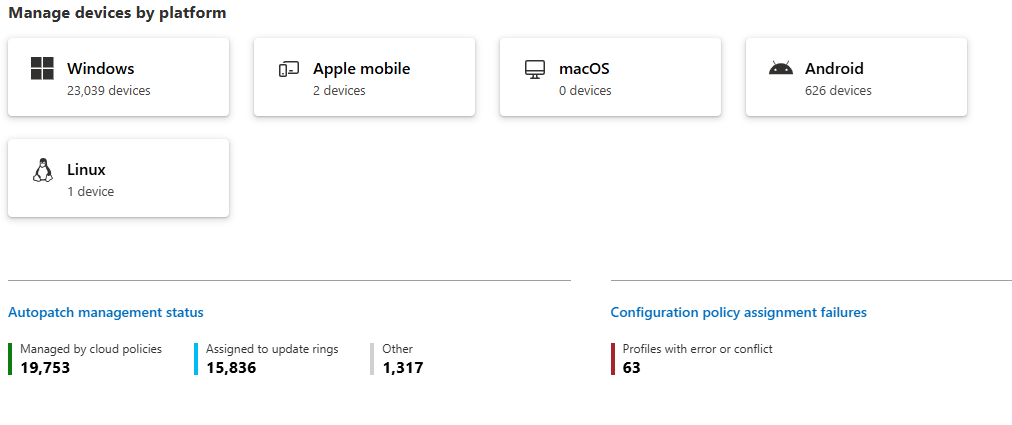
Just for a little amusement, I thought I'd compare our Intune device management numbers (Linux and mac are managed with other products):

-
It could be a little bit more than that, it might be a interface into something like Azures AI Foundry and use MS private OpenAI GPT models. Nothing on their website though to confirm / deny. I'm working on an AI implementation at my org, and there are a lot of questions to ask around these types of systems, a few of them below: Are you (reseller) hosting the models or someone else? Are the models fully private - read only, with no use of prompts / RAG to feed models? If a model is provided by a 3rd party (an API from Anthropic for example) what are privacy conditions, Ts&Cs etc. who agrees to these? Are the models in the UK / EU or globally provisioned? Where's my data being stored / processed? Many models are globally hosted, so you need to understand if that's acceptable to your institute from a GDPR perspective. Might be OK for teaching, but maybe not so much for student data analytics. e.g. using Anthropic via a 3rd party agreement could mean your data is processed in the USA under Ts&Cs you have not confirmed / seen.
-
Not tried it, but get a lot of adds in my feeds for it. But I am working on a project to deliver a similar platform: nebulaONE® - Secure, Affordable, Microsoft-based AI Gateway Would be interesting to see where they overlap and any unique selling points. Cost control and data security are 2 biggest risks we are working to minimise.
-
Its the SSO tax: The SSO Wall of Shame | A list of vendors that treat single sign-on as a luxury feature, not a core security requirement. We ditched Atlassian a few months ago (sso and confluence) due to cost.
-
I think my org now have some reasonably comprehensive guidance for all our users: Generative AI | Guidance, policies and information about using Generative AI for staff and students. This policy page might help in creation of your own: Guidance to Staff on the use of Artificial Intelligence | Governance and Compliance We also have mandatory training now too on AI use - basically co-pilot for anything sensitive is a must. I'm currently working on a project to deliver most other AI models securely via Azure AI Foundry to try prevent (limit) data exfiltration. The uptake stats and cost of this will hopefully come from a good pilot scheme. But its a tricky one no matter the org size and funding available.
-
Comtrya! Time to dust off the box set and watch for the nth time
-

Azure for Students - Anyone use this in their schools?
steve replied to Tefters's topic in Cloud Services
Yeah, shame about Azure Labs. We've been looking at DaaS with Virtual Desktops: Simple, Secure, and Affordable | Apporto Still early days though so no feedback on the service yet. -
Azure for Students - Anyone use this in their schools?
steve replied to Tefters's topic in Cloud Services
If I recall correctly, you'll need an Azure enterprise tenant for your org. This will need Entra ID and a subscription associated to it. There's a process you have to go through to get you org recognised as an educational institute to be able to access the offer. Students need an institutional email address to sign up. So you'll probably need Entra ID account for all student users (might have this already if you use M365). Azure for Students for University IT Admins | IT Should Just Work Microsoft Learn for Educators Program Overview | Microsoft Learn -
Azure for Students - Anyone use this in their schools?
steve replied to Tefters's topic in Cloud Services
Not a school, but we use it with Computer Science students at the uni. I don't think we pre-deploy anything for the students, just give it to them to test / build. In effect each student gets a student subscription, you can view / access them all as a global admin, and might be possible to setup policy to grant a teacher access to them all - but the student will be the subscription owner and may be able to block policy. You might be able to automate the creation of resources for students, but it would be a bit of a steep learning curve if you aren't into infrastructure as code and Azure already. -
Monopoly 50p coin released by Royal Mint for 90th anniversary
steve replied to 6Foot2's topic in General Chat
Having just done the Monopoly board pub crawl in London this weekend for my 50th Birthday, I might just treat myself 😀 -
TP-Link Omada & Cambridge University Selwyn Colleges
steve replied to TP-Link_Joe's topic in Wired Networks
I've been looking at Omada and others for an upgrade to my home / office setup. Is there any commitment from TP-Link of lifecycle of devices and supply of firmware updates? -
I've recently started to have a play around with proxmox. Great so far easy deployment of VMs, containers etc. I bought a couple of cheap Lenovo mini Pcs off ebay. Lots of pre-created scripts that will let you quickly deploy a big array of options: Proxmox VE Helper-Scripts For cloud I'd have a look at developing your IaC skills. Look at something like terraform or OpenTofu with Git / GitLabs. Once you abstract yourself from the GUIs for deployment it doesn't really matter to an extent which cloud provider you're working with. For managing and maintaining VM configuration most things have moved to the cloud for clients (Intune / JAMF / etc). Ansible / chef are potentially things to look at for Linux. For non specific OS management and security have a look at STIGs: Security Technical Implementation Guides These are definitely what we are starting to move towards - using published security baselines for hardening of systems. And it doesn't really matter to us how we get the baselines on, we want to know they are applied and that they continue to be applied - be that in Intune, group policy, ansible, Azure Machine Configuration or any other management tool. Other than that in general I've not really found any vendor agnostic training out there for free. It tends to be geared towards certs or use of a particular cloud provider. Maybe have a look at the various cloud well architected frameworks, these can be a bit more generic about how to design, build and manage cloud services - I've used ChatGPT at times to pull these together and make it a bit more vendor agnostic or look at the differences between them.
-
Wondered if anyone else can check this behaviour on their Azure tenant: You should be able to set "Encryption in transit" on an SQL server (PaaS) to TLS 1.3 - Connectivity settings - Azure SQL Database and SQL database in Fabric | Microsoft Learn I've tried on 2 different tenants (uni and personal) and 2 different regions. Tried the portal and cli. I only get the option for TLS 1.2. I could swear I've changed this before when testing connectivity to a new app. Can anyone else see TLS 1.3 as an option? Or am I loosing my mind and doing something crazy.
-
John Savill's YouTube stuff: https://www.youtube.com/@NTFAQGuy And others have said the MS learn stuff. Some of the modules you create a sandbox Azure setup giving some hands on experience.
-
I've recently upgrade our universities Body Worn Video System to Motorola equipment / software and you can have a pre and post record buffer, so when the button is pressed it stores the previous 2 mins of footage. When docked they automatically upload any captured footage to a central server and remove the local copy. Ours are used well by our campus patrol staff. But I agree there would need to be a significant management overhead if used by teachers who often have other things on their mind. Would be more cost effective to have better fixed CCTV and body worn cameras only used in specific circumstances such isolation units and high risk situations.