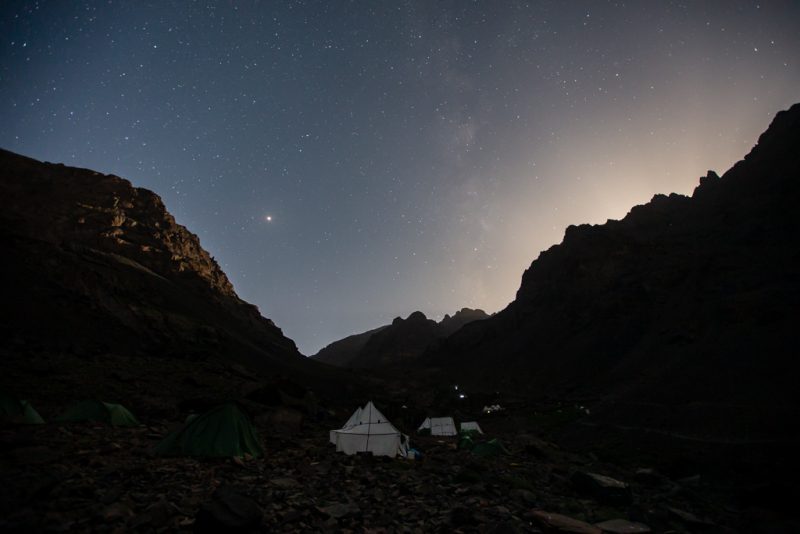
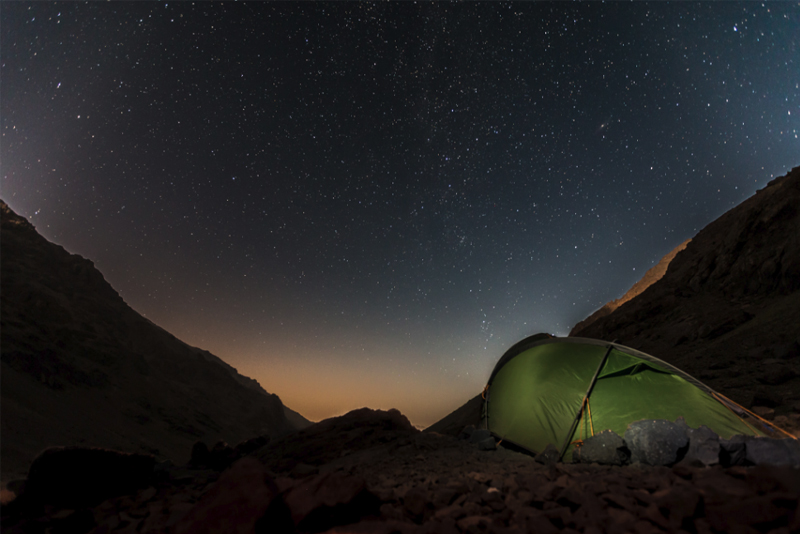
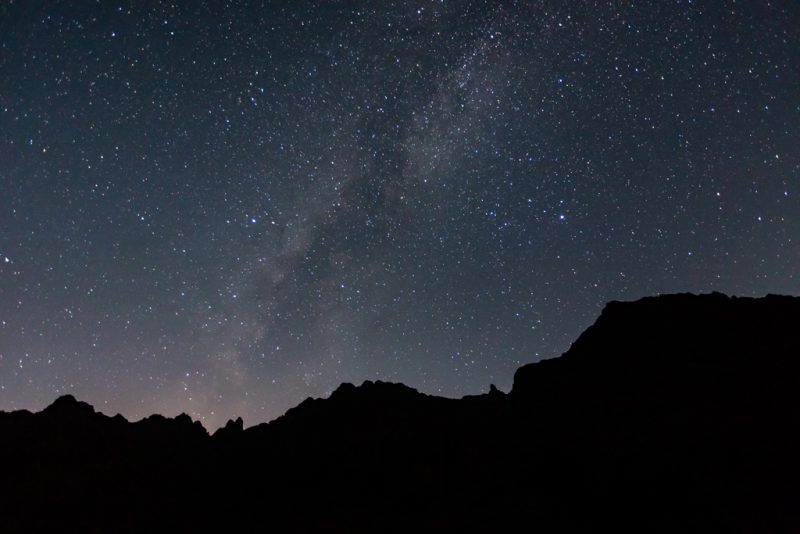
All single shots, no comps. The image with the tent in the foreground was done using a headtorch to 'paint' the tent with light whilst the sky was exposing. Took a good few attempts to get the right balance.
So, the way I focus for stars, is a little unorthodox, perhaps... but here it is...
1. LCD brightness to minimum.
2. Allow your eyes to adjust (5-10 mins is ample)
3. Find your composition through the viewfinder (if the stars are out, it should be bright enough to discern objects around you, if not, use a low intensity red light of some kind, this helps to preserve your night vision)
4. Lock your zoom at the correct focal length for your composition (use some gaffa tape, whatever)
5. Find the brightest star you can in the night sky point the camera directly at that, then with the lens in MF, rotate the focus ring until the star is as small (or in focus, if you prefer) as you can make it.
5 alt. If you have a camera with live view, and the option to digitally zoom whilst in live view, this is the time to use that feature. Again by pointing at the brightest star, this makes it super easy. I use Magic Lantern custom firmware on my camera, but I think it might be possible on stock, not sure, it's been a while since I've used stock.
Vague guide camera settings:
- Exposure: use the 500 rule: 500 / focal length of lens = max seconds you can shoot without streaking. (e.g. 500/16mm = ~31seconds) (less is obviously fine too)
- Aperture: as wide as possible. (small f number)
- ISO: totally camera and conditions dependant, trial and error, but likely quite high
- WB: doesn't matter, shoot in RAW.
As for locking your mirror up and using a remote for shooting... I'm not convinced. You're exposing for say, 30 seconds, so you're talking about reducing shake for say, 100th of a second... or 0.03% of your overall exposure. In any case, I didn't bother. I do use a 2 second delay so at least I'm not touching the camera when it's exposing. I suppose if you're using a lighter weight camera, this may have a bigger impact, so I can see that being an issue. My camera+lens weigh in at 1.4kg, so it doesn't concern me too much.
The absolute most important thing is weather conditions. You want minimal haze and light pollution. I haven't had any real success down in the south of the UK, you may be able to find places further north where the population density is lower. These pictures were from out in the Altas Mountains, at least a 5 hour hike from the nearest town.
Random tip: big rubber bands. Lenses aren't really designed to work pointed straight up, and often suffer from lens droop. Some rubber bands can help keep things where you set them.
I'm currently running a Canon 6D with a 16-35mm f/2.8 L II. We were hiking/camping, so lightweight was critical, so I picked up a Manfrotto PIXI EVO 2-Section Mini Tripod - which worked a treat.
You're too kind, thank you.